

Infertility: No Longer a curse
If you are not able to conceive and really worried about your fertility, the first thing for you to know is that you are not alone.
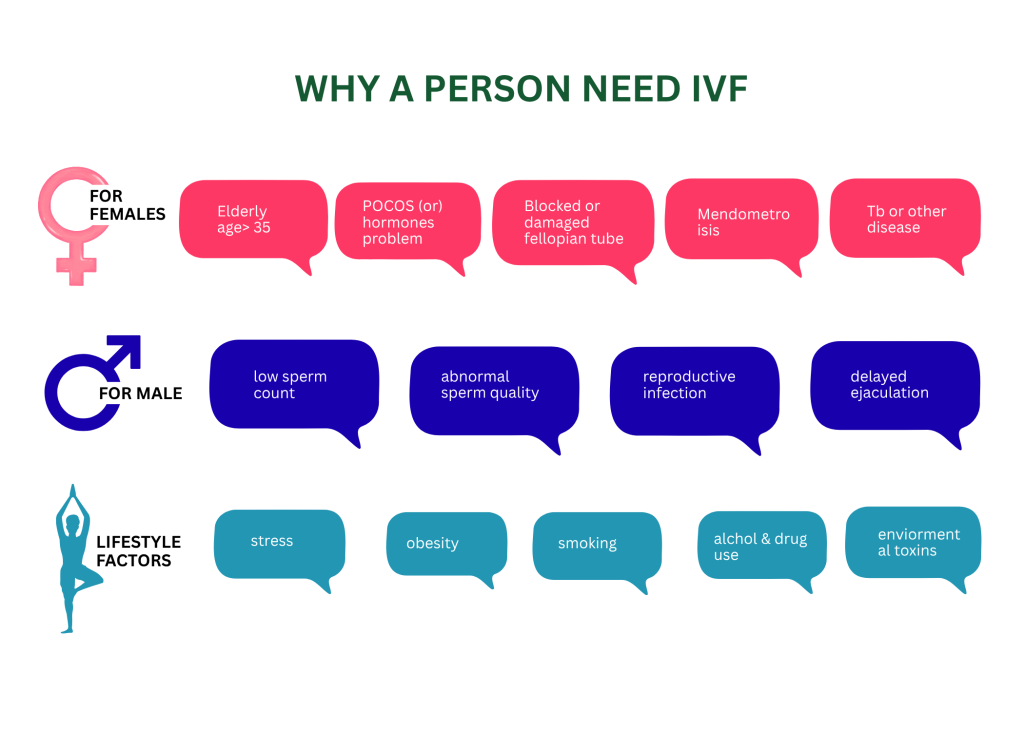
The problem of infertility can stem from anything, in fact both females and males could have issues.
What is Infertility?
Infertility is defined as not being able to get pregnant after one year of unprotected intercurse
VF is not just a treatment.
It is an opportunity to create out of something difficult

How can I get pregnant
Treatment Options are:
Medical treatment
(Ovuation Induction)
Surgical treatment
(Laproscopy+
Hysteroscopy)
IUI
IVF-ICSI

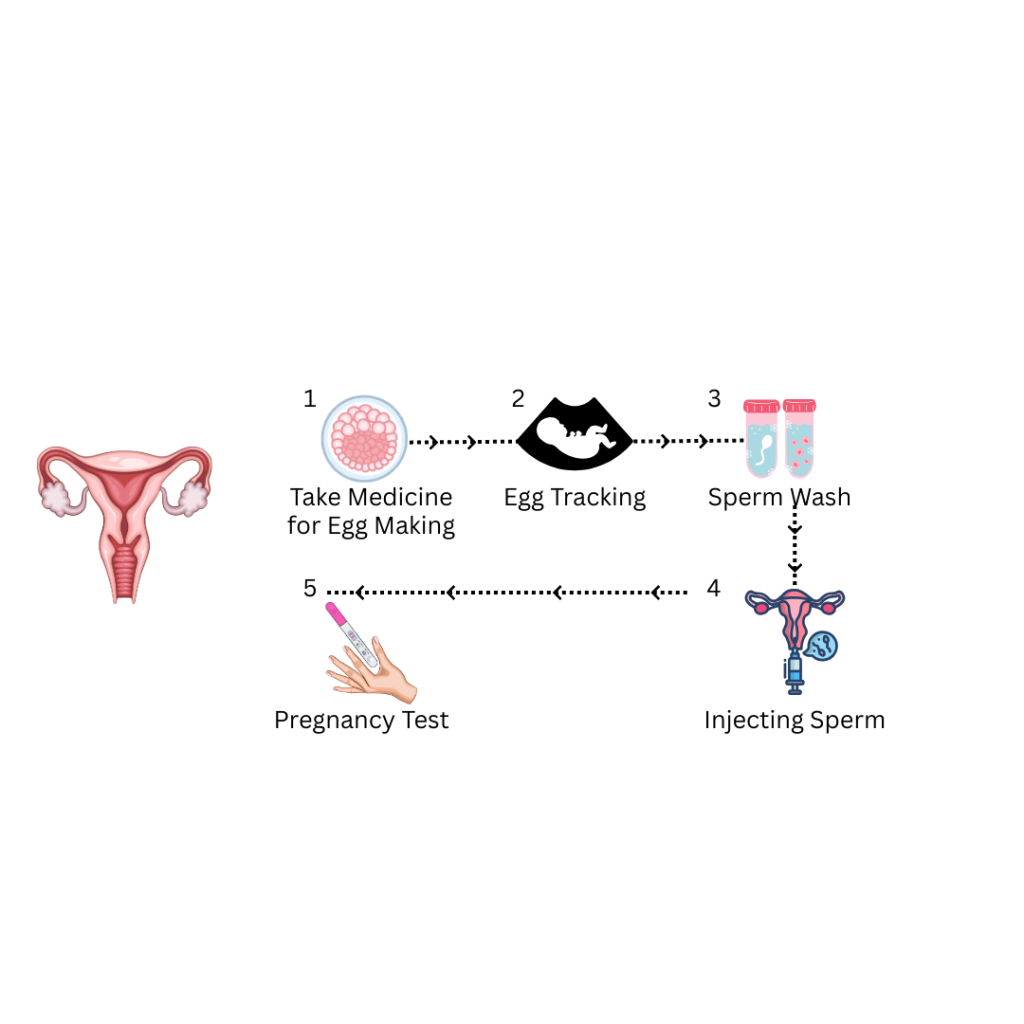
IUI (Intrauterine Insemination)
IUI is a procedure that boosts the chances of pregnancy by placing specially prepared sperms directly in the uterus.
BENEFITS OF IUI
- Risk free
- Pain free
- No need for hospital stay
- Easy treatment
- No rest needed after treatment
- Cost effective
- Less stress on body
IN VITRO-FERTILIZATION
It is a process which fertilizes an egg from a woman outside her body then embryos (formed by egg-sperm fertilization) are put inside her uterus to develop.
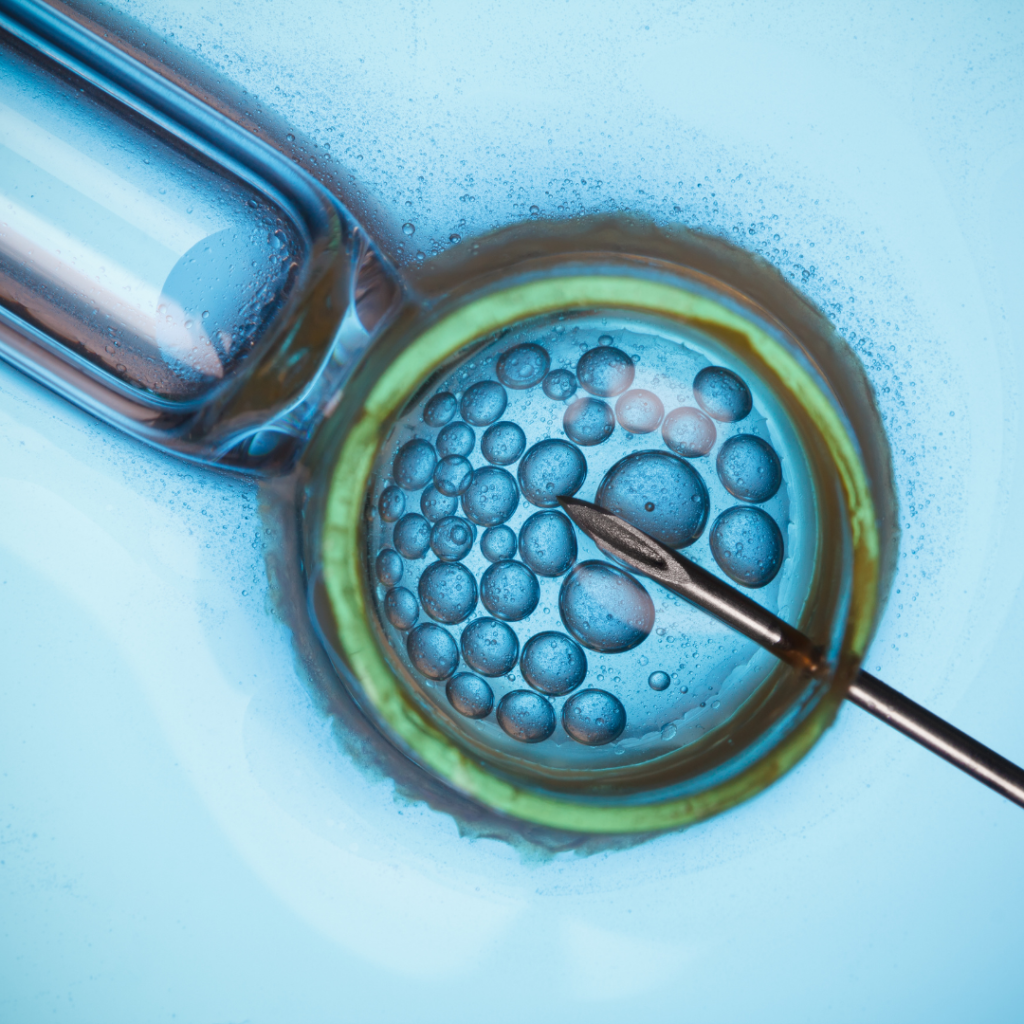
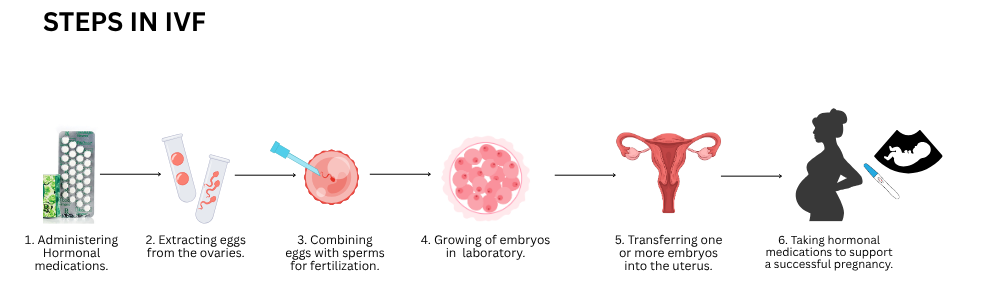
Special Techniques Used in IVF Cycle
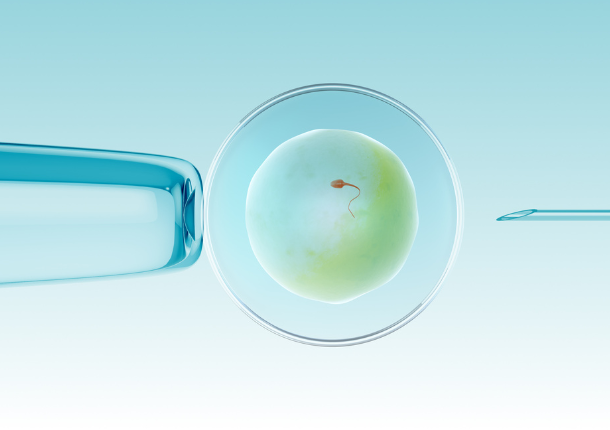
ICSI
It involves injecting one live sperm into female partner’s egg in a laboratory to create an embryo.
Why this technique is used ?
- History of prior IVF Failure
- Nil sperms
- Poor Egg Quality
- Advanced Age
Laser Hatching
Laser-Assisted Hatching is a technique that can make embryos easier to breakthrough its outer wall to implant into the woman’s uterus.
Why we use laser hatching?
- Above 37 years of age
- Thick embryo wall
- Recurrent IVF-Failure
PGS (Pre Genetic Screening)
- This technique identifies the embryos which are free from diseases and then transferred into a women's uterus.
- PGS helps in identifying the best embryos that will lead to a successful and healthy pregnancy for future family.
Benefits of PGD Techniques
- To increase the chances of success.
- It reduces the risk of abortions
- History of genetic diseases such as Down's syndrome, Thalassemia.
- In cases of multiple IVF Failures
Advantages of IVF
- High Success rate of achieving pregnancy
- Pain free
- Risk Free
- Easy to conceive
- No Surgery required
- You can do your daily life work
- No Rest Required
- Improves the chances of having a healthy baby
- Donated eggs/sperms can be used
- No requirement of hospital admission
Why choose us?
Everything under one roof
In house team of:
- Embryologist, Andrologist
- Fertility Consultants
- Counsellors, Stress healing therapies
- Dieticians
- Compassionate Staff
- Advanced Techniques
- 365 Days Working
- Most Affordable Price
- 95% Satisfaction Rate
- 365 Days Working
- Deliver Promising Results
Video Gallery
FAQ
What is embryology in IVF?
Embryology in IVF is the science of creating, monitoring, and developing embryos in a specialized laboratory during fertility treatment. After eggs are collected and fertilized with sperm, embryologists carefully observe embryo growth and select the healthiest embryos for transfer. Advanced embryology techniques play an important role in improving IVF outcomes and supporting successful pregnancies. At Neelam Hospital, our advanced embryology laboratory supports patients seeking the Best IVF Treatment in Punjab through precise embryo assessment and evidence-based fertility care.
What does an embryologist do?
An embryologist is a fertility specialist who works in an IVF laboratory and manages the crucial stages of embryo development. Their responsibilities include handling eggs and sperm, performing fertilization procedures such as ICSI, monitoring embryo growth, freezing embryos, and ensuring optimal laboratory conditions. Their expertise helps maximize the chances of successful fertilization and implantation.
What is embryo freezing?
Embryo freezing, also known as embryo cryopreservation, is a process that allows embryos to be safely preserved for future use. Using advanced freezing techniques, embryos can remain stored for years while maintaining their quality. This option provides flexibility for individuals and couples who wish to delay pregnancy, undergo additional fertility treatments, or preserve fertility for future family planning.
What is blastocyst culture?
Blastocyst culture is an advanced IVF laboratory technique in which embryos are grown for five to six days before transfer. During this period, embryologists closely monitor embryo development and identify those with the highest potential for implantation. Blastocyst transfer may improve embryo selection and can contribute to better pregnancy outcomes in suitable patients.
How successful is IVF with advanced embryology?
The success of IVF depends on several factors, including age, reproductive health, embryo quality, and the fertility treatment plan. Advanced embryology techniques, modern laboratory technology, and careful embryo monitoring can help improve embryo development and selection. While success rates vary from person to person, high-quality embryology services can positively influence IVF outcomes.
What is PGT testing?
Preimplantation Genetic Testing (PGT) is a specialized procedure used to examine embryos for certain genetic or chromosomal abnormalities before embryo transfer. A small sample of cells is carefully analysed to identify healthy embryos with normal chromosome numbers. PGT may help reduce the risk of genetic conditions and support informed fertility treatment decisions for eligible patients.