

The monsoon season brings cooler weather. However, it also increases the risk of mosquito-borne diseases. Among them, dengue and malaria are the most common. Both illnesses begin with fever and body pain. Therefore, many people confuse one with the other.
Understanding dengue vs malaria is important because both diseases have different causes, tests, and treatments. Early diagnosis helps doctors provide the right care and may reduce the risk of complications.
If you or a family member develops a high fever during the rainy season, do not ignore it. Instead, seek medical advice from a qualified healthcare professional. At Neelam Hospital, a trusted hospital in Rajpura, experienced doctors and trained healthcare staff provide medical evaluation and treatment for seasonal illnesses.
Dengue is a viral infection. It spreads through the bite of an infected Aedes mosquito. These mosquitoes usually bite during the daytime. In addition, they breed in clean, stagnant water found around homes and workplaces.
Dengue cases often increase during the rainy season. Therefore, preventing mosquito breeding is one of the best ways to lower the risk.
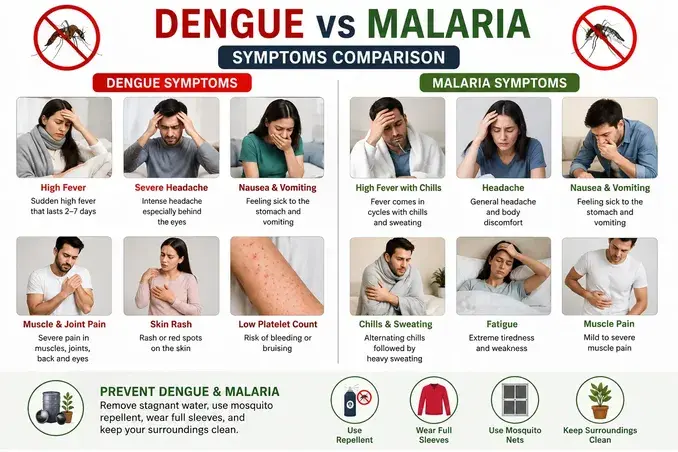
Common Dengue SymptomsThe early dengue symptoms may include:
Doctors may also monitor the platelet count when clinically needed. However, platelet count alone does not determine how severe dengue is. Medical assessment always considers the patient's overall condition.
Malaria is different from dengue. It is caused by a parasite called Plasmodium. The disease spreads through the bite of an infected Anopheles mosquito. Unlike Aedes mosquitoes, Anopheles mosquitoes usually bite from evening until early morning.
Malaria requires specific medicines. Therefore, early diagnosis is essential.
Common Malaria SymptomsThe most common malaria symptoms include:
In many cases, fever comes in cycles. This pattern often helps doctors suspect malaria. However, laboratory tests are still necessary to confirm the diagnosis.
Although both are mosquito-borne diseases, they have several important differences. Understanding these differences can help you seek timely medical care and receive the right treatment.
| Feature | Dengue | Malaria |
|---|---|---|
| Cause | Dengue virus | Plasmodium parasite |
| Spread By | Aedes mosquito | Anopheles mosquito |
| Mosquito Bites | Mostly during the daytime | Mostly during the evening and night |
| Fever Pattern | Sudden high fever | Fever with chills and sweating |
| Platelet Count | May decrease and may require monitoring | Usually not the primary concern |
| Treatment | Supportive medical care as advised by a doctor | Anti-malarial medicines prescribed by a doctor |
Because the symptoms often overlap, self-diagnosis is not recommended. Instead, consult a qualified healthcare professional for proper evaluation and testing.
Doctors begin by reviewing your symptoms and medical history. After that, they may recommend blood tests.
Common investigations include:These tests help identify the exact illness. As a result, patients receive suitable treatment without unnecessary delays.
Currently, most dengue infections do not have a specific antiviral treatment. Instead, treatment focuses on supportive care.
Doctors may recommend:Patients with warning signs may require hospital care for closer observation.
Treatment for MalariaUnlike dengue, malaria can be treated with anti-malarial medicines. However, the choice of medicine depends on the type of parasite and the patient's condition.
It is important to complete the prescribed course of treatment. In addition, avoid taking medicines without medical advice.
Fortunately, simple precautions can help reduce the risk of infection.
You should:These habits protect not only your family but also your community.
When Should You Visit a Hospital?Do not delay medical care if you notice:
Early medical evaluation helps doctors begin appropriate treatment without delay.
If you are looking for a reliable hospital in Rajpura, Neelam Hospital offers patient-focused healthcare for individuals and families. The hospital is supported by experienced doctors, qualified nurses, and trained healthcare professionals who are committed to delivering compassionate medical care.
From medical consultations to diagnostic support and follow-up care, the healthcare team focuses on helping patients receive timely evaluation and appropriate treatment. If you are searching for the best hospital in Rajpura for seasonal health concerns, Neelam Hospital is dedicated to serving the local community with quality healthcare services.
Knowing the difference between dengue vs malaria can help you act quickly when symptoms appear. Although both diseases spread through mosquito bites, they have different causes, symptoms, and treatments. Therefore, proper diagnosis is essential.
Never ignore persistent fever during the rainy season. Instead, consult a qualified healthcare professional for timely evaluation. Early diagnosis, appropriate treatment, and preventive measures can support better recovery and overall health.
If you need medical guidance during the monsoon season, Neelam Hospital, a trusted hospital in Rajpura, is here to provide professional healthcare support for you and your family.
Dengue and malaria are both mosquito-borne diseases, but they are caused by different organisms. Dengue is caused by a virus spread by Aedes mosquitoes, while malaria is caused by a Plasmodium parasite transmitted by Anopheles mosquitoes.
2. What are the common symptoms of dengue?Common dengue symptoms include high fever, headache, pain behind the eyes, muscle and joint pain, skin rash, weakness, nausea, and vomiting. In some cases, doctors may monitor platelet count based on the patient's condition.
3. What are the common symptoms of malaria?Common malaria symptoms include fever, chills, sweating, headache, body pain, weakness, nausea, and vomiting. Some patients may experience fever episodes that occur in cycles.
4. Can dengue and malaria occur at the same time?Yes, in some situations, a person can have both dengue and malaria together because both are spread through mosquitoes. Proper medical testing is important for accurate diagnosis and treatment.
5. Why is platelet count monitored in dengue?During dengue infection, platelet levels may decrease in some patients. Doctors may recommend monitoring the platelet count along with other health indicators to assess the patient's condition.