
Starting a family can bring many emotions, especially when pregnancy takes longer than expected. Fertility challenges can affect both partners. However, the right medical guidance can help couples understand their options.
If you are searching for an IVF Center in Tricity, Neelam Hospital offers fertility consultation and assisted reproductive treatment. The hospital is located on the Rajpura–Chandigarh Highway, Opposite Chitkara University.
Neelam Hospital provides fertility care under experienced IVF specialists. Its fertility services include IVF, ICSI, IUI, and Frozen Embryo Transfer. The medical team evaluates each patient's needs before recommending a suitable treatment.
Choosing an IVF center involves evaluating specialist qualifications, available fertility treatments, laboratory facilities, and patient care. At Neelam Hospital, fertility specialists assess individual medical histories and recommend treatment options based on clinical findings. Here are some factors patients can consider when exploring fertility care at the hospital.
1. Experienced IVF DoctorsAn experienced fertility specialist plays an important role in infertility evaluation and treatment planning. Neelam Hospital has two experienced IVF and gynaecological endoscopy directors:
Their qualifications and clinical experience support fertility consultations and treatment planning.
2. IVF Infrastructure and Treatment FacilitiesIVF treatment involves several medical procedures and laboratory processes. Each stage requires careful coordination between specialists and laboratory professionals. The availability of appropriate fertility infrastructure helps support different stages of assisted reproduction.
Patients should discuss the laboratory facilities, embryo handling procedures, monitoring arrangements, and treatment protocols during consultation. The medical team can explain which facilities and procedures apply to each treatment plan.
3. Patient-Focused Fertility CareInfertility treatment involves medical, emotional, and personal considerations. Couples often have questions about investigations, treatment duration, medication, and pregnancy outcomes.
Clear communication helps patients understand each stage. The medical team can explain available options and address individual concerns. Patients should feel comfortable discussing their medical history and treatment expectations.
4. Treatment TransparencyUnderstanding treatment costs and medical recommendations helps couples make informed decisions. IVF expenses can vary according to individual medical needs. Medication, laboratory procedures, additional investigations, and embryo freezing can affect the total cost.
Patients should request a detailed treatment estimate before starting a cycle. The specialist can also explain the purpose of each procedure and discuss possible alternatives.
Fertility treatment does not follow one standard approach. Doctors consider several factors before recommending assisted reproductive techniques.
These factors include age, ovarian reserve, sperm health, reproductive history, and previous treatment outcomes.
Neelam Hospital offers different fertility treatment options. The specialist can recommend an appropriate approach after evaluating both partners.
IVF stands for In Vitro Fertilisation. This treatment involves fertilising an egg with sperm outside the body.
Doctors usually begin by evaluating ovarian health and reproductive function. They then develop a treatment plan according to the patient's medical condition.
A typical IVF cycle includes these stages:
Doctors may recommend a pregnancy test after the appropriate waiting period.
IVF may help couples experiencing blocked fallopian tubes, certain ovulation disorders, male-factor infertility, or unexplained infertility. However, treatment suitability depends on individual medical findings.
ICSI stands for Intracytoplasmic Sperm Injection. It is a specialised fertilisation technique used during IVF. In this procedure, an embryologist injects one sperm directly into a mature egg.
Doctors may consider ICSI in cases involving:
ICSI can help overcome specific fertilisation challenges. However, it does not guarantee embryo development or pregnancy.
The specialist determines whether ICSI offers a suitable option after reviewing both partners' reports.
IUI stands for Intrauterine Insemination. This treatment involves placing prepared sperm directly inside the uterus around ovulation.
The procedure aims to bring sperm closer to the egg during the fertile window.
Doctors may recommend IUI for selected cases of mild male-factor infertility, unexplained infertility, or certain ovulation-related conditions.
A typical IUI cycle involves:IUI involves fewer laboratory steps than IVF. However, it may not suit every fertility condition. Your fertility specialist can explain the expected benefits and limitations.
Frozen Embryo Transfer involves transferring a previously frozen embryo into the uterus. This option allows patients to use embryos created during an earlier IVF cycle. Doctors first assess the uterine lining and overall reproductive health. The treatment may involve natural-cycle monitoring or prescribed hormonal medication.
Once the uterine lining reaches the appropriate stage, the specialist schedules embryo transfer. FET can offer additional treatment opportunities without repeating ovarian stimulation and egg retrieval for that transfer. The outcome depends on embryo quality, age-related factors, uterine health, and other medical considerations.
Some couples may require donor eggs or donor sperm during fertility treatment. Doctors consider this option when specific medical conditions affect the availability or suitability of a patient's own eggs or sperm.
The specialist discusses the medical reasons, available options, consent requirements, and applicable legal regulations. Donor IVF requires careful counselling and informed decision-making. Patients should discuss eligibility and treatment arrangements directly with the hospital.
A fertility specialist does more than recommend a treatment procedure. The doctor evaluates several aspects of reproductive health before developing an individual plan.
These may include:The specialist reviews these findings before recommending IVF, ICSI, IUI, or another suitable option.
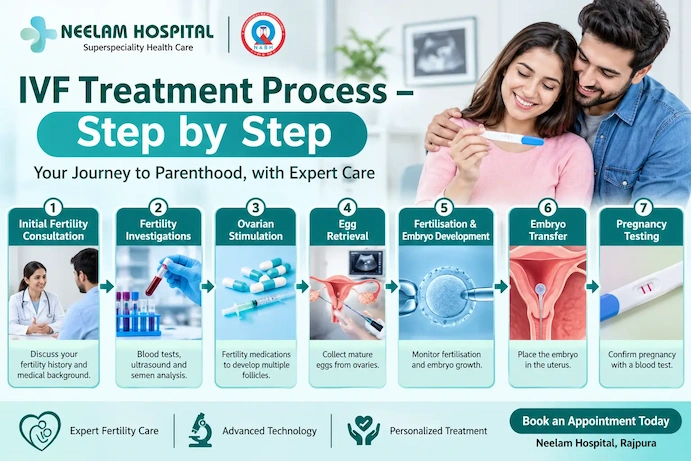
Understanding the IVF process can help couples prepare for treatment. Each IVF cycle follows a planned sequence. However, the exact timeline varies according to individual medical needs.
Here is an overview of the major stages.
The first consultation helps doctors understand the couple's fertility history. The specialist reviews previous investigations, medical conditions, menstrual history, and treatment records.
Both partners may need specific fertility tests. This evaluation helps identify possible causes of infertility.
Doctors may recommend blood tests, ultrasound examinations, and semen analysis.
Common investigations include:Not every patient requires every investigation. The doctor selects tests according to individual clinical findings.
During IVF, doctors prescribe fertility medication to stimulate the ovaries. These medicines encourage the development of multiple follicles.
The patient attends follow-up appointments for ultrasound monitoring and blood tests when required. Doctors adjust medication according to the response.
Doctors schedule egg retrieval when the follicles reach the appropriate stage. The procedure involves collecting mature eggs from the ovaries.
The medical team performs this procedure using an appropriate clinical technique. The specialist explains preparation, medication, and recovery instructions beforehand.
Embryologists assess the collected eggs and available sperm. They use conventional IVF or ICSI, depending on the treatment plan.
The laboratory monitors fertilisation and embryo development. The specialist discusses embryo development and the next treatment stage.
The doctor selects an embryo for transfer according to clinical and laboratory findings. A thin catheter helps place the embryo inside the uterus.
The procedure usually does not require major surgery. The medical team provides instructions for medication and follow-up care.
Doctors recommend a blood pregnancy test after the appropriate interval. The test measures beta-hCG levels to assess whether implantation has occurred.
A positive result requires further monitoring and an ultrasound at the appropriate time. Patients should follow their doctor's instructions during this stage.
Neelam Hospital is located on the NH-07 Rajpura–Chandigarh Highway, opposite Chitkara University, Rajpura, Punjab.
Its location may be convenient for patients travelling from Chandigarh, Mohali, Panchkula, Zirakpur, and nearby areas.
Patients can use Rajpura as their destination reference when planning a visit. Those travelling from outside Rajpura should check their preferred route and confirm appointment availability before departure.
For directions and other visit-related information, contact the hospital directly.
Hospital Address:NH-07, Rajpura–Chandigarh Highway Opposite- Chitkara University Rajpura, Punjab – 140401.
Phone: 01762 501501
Email: neelamhospital@gmail.com
Plan Your IVF ConsultationBefore visiting, keep your previous fertility reports and medical records ready. These documents can help the specialist understand your medical history.
You may also prepare questions about treatment duration, medication, procedures, and estimated expenses. An organised consultation helps you understand the next steps.
Neelam Hospital in Rajpura offers fertility consultation and assisted reproductive treatment. Its services include IVF, ICSI, IUI, and Frozen Embryo Transfer. Patients from Chandigarh, Mohali, Panchkula, and nearby areas can contact the hospital for appointments.
2. How much does IVF treatment cost in Tricity?IVF costs vary according to individual treatment requirements. Medication, investigations, laboratory procedures, and additional services can affect the total expense. Previous treatment history can also influence the treatment plan. Contact Neelam Hospital for a personalised cost estimate.
3. How many days does an IVF cycle take?An IVF cycle generally involves several weeks of treatment. Ovarian stimulation often takes around 8–14 days. However, the duration can vary. The process also includes egg retrieval, fertilisation, embryo development, and transfer. Frozen embryo transfers may follow a separate schedule. Your specialist can explain the expected timeline.
4. What is the difference between IVF and ICSI?IVF involves combining eggs and sperm in a laboratory dish. ICSI involves injecting one sperm directly into a mature egg. Doctors may recommend ICSI for selected male-factor infertility cases or previous fertilisation difficulties. Both techniques form part of assisted reproductive treatment.
5. Is IVF successful on the first attempt?IVF success varies between patients. Age, ovarian reserve, embryo quality, uterine health, and underlying medical conditions can influence outcomes. Some couples achieve pregnancy during their first cycle. Others may require additional treatment. No specialist can guarantee a successful pregnancy.
6. Which documents should I bring for my first IVF consultation?Bring previous medical reports, ultrasound scans, hormone test results, semen analysis, and previous IVF records. Also carry your current medication details and medical history.
Fertility concerns deserve careful medical attention and informed decisions. The right specialist can help you understand possible causes, available treatments, and realistic expectations.
Neelam Hospital provides fertility consultation and assisted reproductive treatment for patients from Tricity and nearby regions.
If you are looking for an IVF Center in Tricity, contact the hospital to discuss your requirements. Speak with the fertility team, understand your treatment options, and plan your next step with proper medical guidance.
Book Your Appointment at Neelam Hospital