Endometriosis can affect reproductive health and make conception difficult for some women. Endometriosis and infertility treatment focus on managing the condition and understanding its impact on fertility. However, an endometriosis diagnosis does not mean pregnancy is impossible. Many women conceive naturally, while others need medical or fertility support.
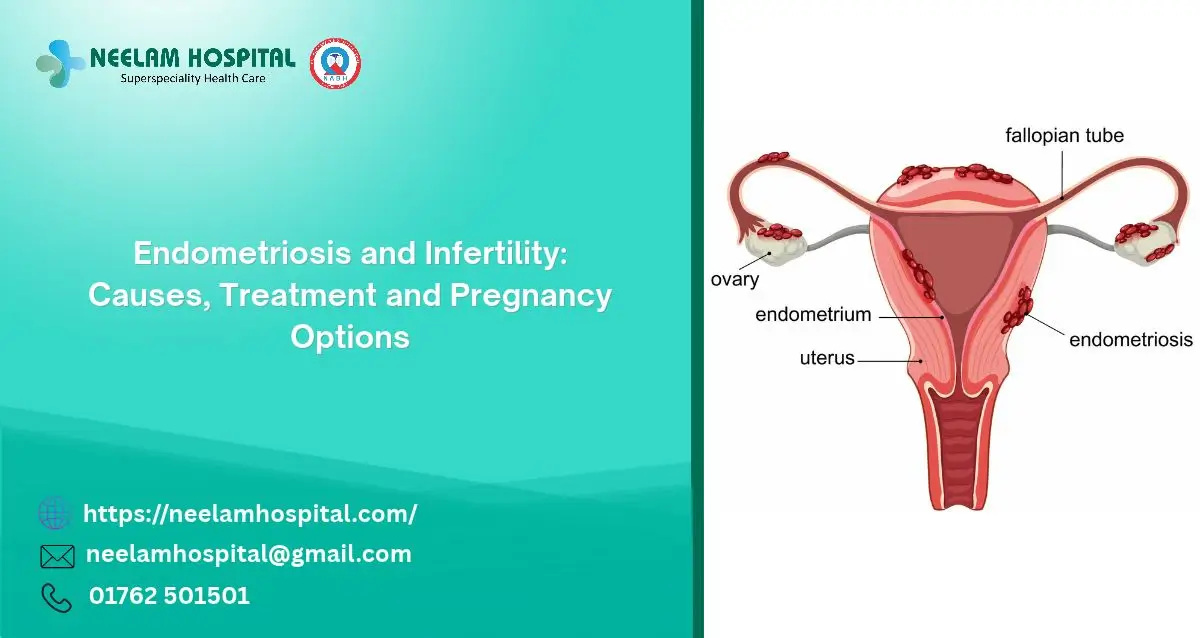
Endometriosis develops when tissue similar to the uterine lining grows outside the uterus. These growths can cause inflammation, pelvic pain, and scar tissue. In some women, they also affect the ovaries and fallopian tubes.
Fortunately, several treatment options can help manage this condition. These include medication, laparoscopic surgery, IUI, and IVF. Selected patients may also benefit from robotic-assisted surgery.
The right treatment depends on age, symptoms, ovarian reserve, and pregnancy plans. Therefore, an early consultation with a gynaecologist can help women understand their options.
Endometriosis is a condition in which tissue similar to the uterine lining grows outside the uterus. It commonly affects the ovaries, fallopian tubes, and pelvic lining. In some women, this condition can affect reproductive health and make conception difficult. Understanding its impact on fertility is important when considering Endometriosis and Infertility Treatment options.
This tissue responds to hormonal changes during the menstrual cycle. However, it cannot leave the body like normal menstrual blood. Consequently, surrounding tissues may develop irritation and inflammation.
Over time, some women develop adhesions. These are bands of scar tissue that can connect nearby organs. They may restrict the normal movement of reproductive structures.
Endometriosis can also cause ovarian endometriomas. These cysts develop when endometriosis affects ovarian tissue. Depending on their size and location, they may influence ovarian function.
The condition does not affect every woman equally. Some women experience severe menstrual pain, while others have mild or no symptoms.
Endometriosis can develop in different stages:These stages describe disease extent. They do not independently determine pregnancy chances.
Yes, endometriosis can affect fertility in some women. However, not every woman with this condition experiences difficulty conceiving. Can endometriosis cause infertility? The answer depends on how the condition affects the reproductive organs and their functions.
Here are some important ways it may influence conception.Possible implantation difficulties: Some women with endometriosis experience challenges during embryo implantation. However, this does not happen in every case.
How Does Endometriosis Affect Female Fertility?The condition may influence different stages of conception. Its impact depends on lesion location, disease severity, and individual reproductive health.
Some women have healthy ovarian function and open fallopian tubes. Others develop adhesions or ovarian involvement that require treatment.
A fertility assessment helps identify the factors affecting conception. Based on these findings, doctors can discuss natural pregnancy attempts, surgery, IUI, or IVF.
Endometriosis symptoms can develop gradually. Many women initially mistake them for ordinary menstrual discomfort. However, persistent or severe symptoms deserve medical attention. Recognising these symptoms early can help women seek timely medical advice and understand whether they may need Endometriosis and Infertility Treatment.
Painful Periods and Chronic Pelvic PainSevere menstrual cramps are a common symptom. The pain may begin before periods and continue during menstruation.
Some women also experience pelvic pain between periods. This discomfort can affect sleep, work, exercise, and everyday activities.
Pain During IntercourseSome women experience deep pelvic pain during or after intercourse. Endometriosis lesions near pelvic structures may contribute to this discomfort.
Persistent pain should never be ignored. A gynaecologist can assess the possible cause and recommend suitable investigations.
Difficulty Getting PregnantDifficulty conceiving can sometimes be an early sign of reproductive complications. Women may experience delays despite regular menstrual cycles.
However, infertility has several possible causes. A proper evaluation helps determine whether endometriosis contributes to the problem.
Other symptoms may include bloating, painful bowel movements, discomfort during urination, and fatigue. Some symptoms become more noticeable during menstruation.
Pregnancy chances with endometriosis vary from woman to woman. Some women conceive naturally, while others need fertility treatment. Understanding individual fertility factors is important when considering Endometriosis and Infertility Treatment and planning a healthy pregnancy.
Several factors influence the possibility of pregnancy:Women with mild disease may have different outcomes from women with severe endometriosis. However, the disease stage alone cannot predict an individual's pregnancy chances.
Can Women with Endometriosis Have a Healthy Pregnancy?Yes, many women with endometriosis experience successful pregnancies. However, pregnancy outcomes depend on individual health and other medical factors.
Some studies associate endometriosis with certain pregnancy complications. These may include preterm birth and placental complications. Nevertheless, many affected women have uncomplicated pregnancies.
Women planning pregnancy should discuss their medical history with a specialist. Appropriate monitoring can help identify individual risks.
The choice of Endometriosis and Infertility Treatment depends on age, ovarian reserve, disease involvement, and pregnancy goals. Depending on individual findings, doctors may discuss natural conception, laparoscopic surgery, IUI, or IVF.
Avoid delaying fertility assessment when conception becomes difficult. Early evaluation helps women understand their reproductive options.
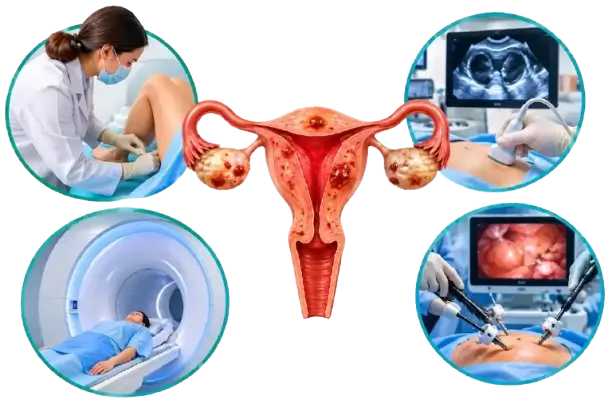
Accurate diagnosis helps doctors understand the location and extent of endometriosis. The evaluation usually begins with a discussion about symptoms and menstrual history. For women experiencing difficulty conceiving, proper diagnosis also helps specialists determine suitable Endometriosis and Infertility Treatment options based on their reproductive health.
Doctors may recommend the following investigations.
Pelvic ExaminationA gynaecologist may perform a pelvic examination to check for tenderness, unusual masses, or restricted movement around pelvic organs.
This examination provides useful clinical information. However, a normal examination does not completely rule out endometriosis.
Ultrasound and MRIPelvic ultrasound helps identify ovarian endometriomas and certain forms of deep endometriosis. A transvaginal ultrasound may provide detailed images of pelvic structures.
Doctors may recommend an MRI when they need additional information. It can help assess deep lesions and their relationship with nearby organs.
However, imaging cannot detect every small endometriosis lesion.
Laparoscopy for Diagnosis of EndometriosisLaparoscopy is a minimally invasive surgical procedure. The surgeon inserts a small camera through tiny abdominal incisions. This allows direct examination of the pelvic cavity. The surgeon may also collect tissue samples for laboratory testing.
In selected cases, doctors can remove visible endometriosis during the same procedure. However, surgery is not necessary for every patient. The specialist considers symptoms, imaging findings, fertility goals, and previous treatments before recommending laparoscopy.
The specialist considers symptoms, imaging findings, fertility goals, and previous treatments before recommending laparoscopy. These findings also help doctors decide whether medication, surgery, or assisted reproductive techniques may be appropriate as part of Endometriosis and Infertility Treatment.
Treatment aims to manage symptoms and address fertility concerns. Doctors select an approach according to the patient's condition and pregnancy plans.
Fertility treatment for endometriosis may include medication, surgery, or assisted reproductive techniques.
Medical Management of EndometriosisDoctors may prescribe medication to control pain and other symptoms. Treatment can include pain-relief medicines and hormonal therapies.
Hormonal medicines help control endometriosis-related activity. However, most hormonal treatments prevent pregnancy during their use.
Therefore, doctors consider pregnancy plans before prescribing these medicines. Hormonal suppression alone does not improve natural pregnancy rates.
Fertility-Preserving Laparoscopic SurgeryLaparoscopic surgery allows surgeons to remove selected endometriosis lesions and release adhesions.
This approach may help restore pelvic anatomy in suitable patients. It may also improve pain and support natural conception in certain cases.
However, ovarian surgery requires particular care. Removing an endometrioma can sometimes reduce ovarian reserve.
Therefore, surgeons assess the potential benefits and risks before recommending surgery. Age, ovarian reserve, cyst characteristics, and previous operations all matter.
IUI and IVF Treatment OptionsAssisted reproductive techniques offer additional pregnancy options for selected women.
Intrauterine insemination (IUI) places prepared sperm directly inside the uterus. Doctors may combine it with medication that supports ovulation.
IUI may suit women with selected cases of mild endometriosis. It also requires suitable fertility findings and sperm parameters.
In vitro fertilization (IVF) involves collecting eggs and fertilising them with sperm in a laboratory. Doctors then transfer an embryo into the uterus.
IVF may become suitable when:IVF is not necessary for every woman with endometriosis. The specialist recommends it after evaluating individual fertility needs.
Every woman's fertility journey has different requirements. Therefore, doctors should avoid recommending identical treatment plans.
A personalised assessment may include:These findings help doctors choose an appropriate treatment pathway. They also help reduce unnecessary procedures and treatment delays.
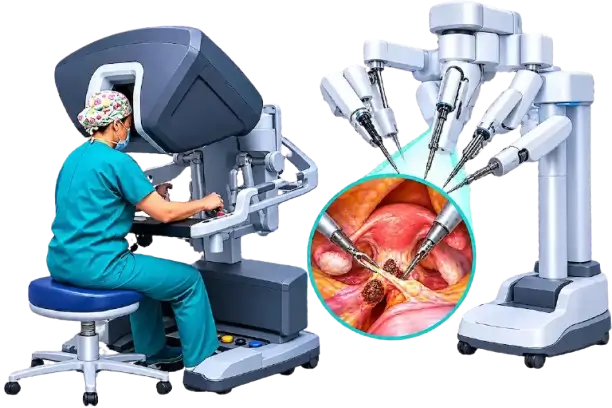
Advanced endometriosis can affect complex areas around the uterus, ovaries, bowel, and bladder. Treating these lesions requires careful surgical planning.
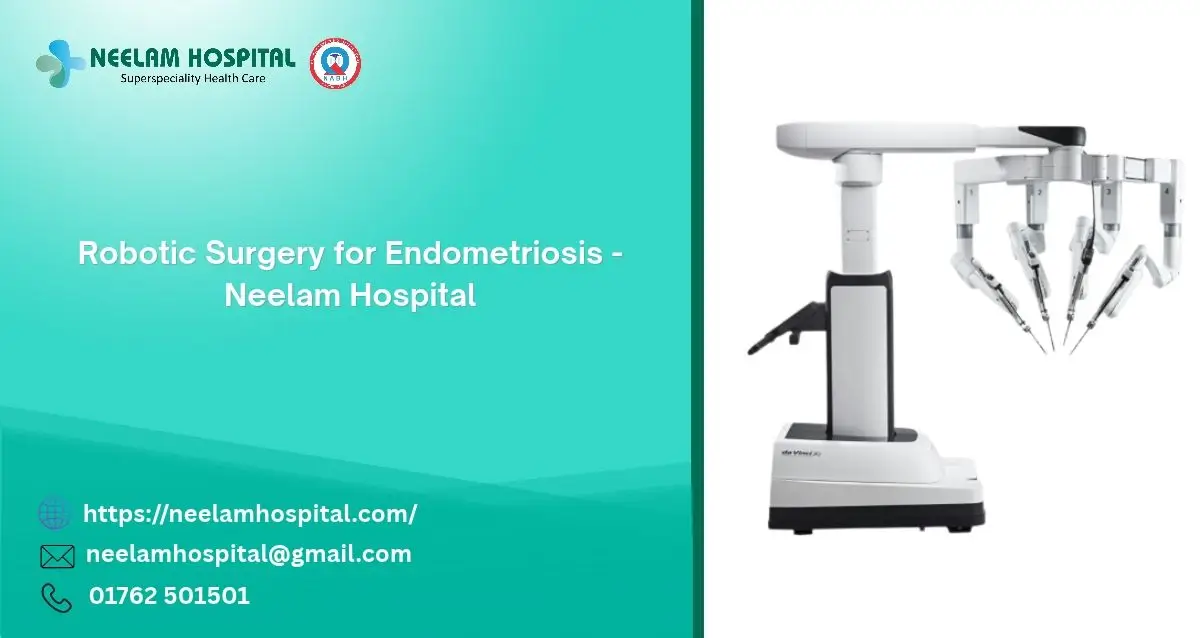
Robotic surgery for endometriosis provides an advanced minimally invasive approach for selected patients. The surgeon controls specialised instruments through a robotic console.
The robotic system does not perform surgery independently. The surgeon remains responsible for every movement and surgical decision.
How Does Robotic-Assisted Endometriosis Surgery Work?The surgeon makes small incisions in the abdomen. A camera and specialised instruments enter through these openings.
The surgeon views a magnified, three-dimensional image from the console. The robotic instruments translate the surgeon's hand movements into controlled movements inside the body.
During the procedure, the surgeon may:The exact surgical steps depend on the location and extent of the disease.
Potential Benefits and Limitations of Robotic-Assisted SurgeryRobotic technology offers certain technical features that can assist with complex pelvic procedures.
Potential advantages include:However, robotic surgery also has limitations. It may involve higher costs and longer operating times in some settings.
It does not guarantee better fertility outcomes than conventional laparoscopy. Surgical expertise and appropriate patient selection remain essential.
Severe or stage IV endometriosis can involve extensive adhesions and deep pelvic lesions. These changes may affect several organs simultaneously.
In selected cases, robotic-assisted surgery may help surgeons work around complex pelvic structures. The surgical team may also involve other specialists when lesions affect the bowel, bladder, or ureters.
Women planning pregnancy need additional consideration before surgery. Doctors assess ovarian reserve, previous operations, lesion location, and reproductive goals.
For some patients, surgery may help manage disease and restore pelvic anatomy. Others may benefit more from proceeding directly to fertility treatment.
Therefore, robotic surgery should remain an individual clinical decision. It does not guarantee natural conception or successful IVF.
Yes, endometriosis can return after surgery. Removing visible lesions does not always prevent future disease activity.
Some women experience recurring pelvic pain. Others develop new or persistent endometriosis-related growths.
Recurrence may depend on disease extent, lesion location, residual tissue, and individual biological factors.
Regular follow-up helps doctors monitor symptoms after treatment. Women who plan pregnancy may also need a fertility assessment.
Doctors can discuss further treatment according to the patient's symptoms and reproductive goals. Hormonal medication may help women who are not planning immediate pregnancy.
Persistent pelvic pain and difficulty conceiving deserve proper medical evaluation. Early consultation can help identify possible endometriosis-related concerns.
Consider visiting a specialist if you experience:Women aged 35 or older should consider a fertility evaluation after six months of unsuccessful pregnancy attempts. Women with known reproductive conditions may benefit from earlier assessment.
An experienced Endometriosis specialist in Rajpura can review symptoms and recommend suitable investigations.
Early consultation does not automatically mean surgery or IVF. It helps women understand their condition and make informed treatment decisions.
Managing endometriosis requires attention to both gynaecological health and future pregnancy plans. Women may need different forms of care depending on their symptoms and fertility requirements.
At Neelam Hospital, Rajpura, women can consult experienced gynaecology specialists for reproductive health concerns and fertility guidance. The gynaecology team includes Dr. Shikha Gupta and Dr. Gaurika Aggarwal.
Dr. Shikha Gupta's qualifications and clinical role focus on women's reproductive and gynaecological health.
Her area of work brings together fertility care and gynaecological endoscopy. This combination supports the assessment of women with pelvic health concerns and conception difficulties.
Her consultation can help patients understand available investigations and treatment choices. Women can discuss their symptoms, previous treatment, and pregnancy expectations.
Dr. Gaurika Aggarwal's qualifications bring together reproductive care, obstetric assessment, and ultrasonography.
Her clinical role supports the evaluation of fertility-related concerns alongside pregnancy and women's health needs.
Patients can discuss their reproductive history and diagnostic findings during consultation. This helps them understand the next steps in their treatment journey.
A Patient-Focused Approach to Fertility CareEndometriosis management often requires more than one consultation. Symptoms, investigation results, and pregnancy priorities can influence treatment decisions.
At Neelam Hospital, the consultation process may involve:Women exploring Endometriosis treatment in Rajpura can consult the gynaecology team at Neelam Hospital.
The aim is to support informed decisions through appropriate clinical assessment and treatment planning.
Yes, many women with endometriosis conceive naturally. Pregnancy depends on age, ovarian reserve, fallopian tube health, and disease severity. Some women may need fertility support.
2. Does Endometriosis Always Cause Infertility?No, endometriosis does not always cause infertility. Some women conceive without medical assistance. Others may require fertility investigations and treatment.
3. Can Robotic Surgery Help Treat Severe Endometriosis?Robotic-assisted surgery may help treat selected cases of complex endometriosis. It offers magnified visualisation and flexible instrument movements. However, suitability depends on disease location and surgical expertise.
4. Is IVF Necessary for Women with Endometriosis?No, IVF is not necessary for every woman with endometriosis. Some women conceive naturally or benefit from surgery or IUI. Doctors recommend IVF when individual fertility findings support this approach.
5. How Long Should I Wait to Try Pregnancy After Endometriosis Surgery?The recommended waiting period depends on the surgical procedure and recovery. Your surgeon can advise when it is appropriate to try conceiving. Age and ovarian reserve also influence fertility planning.
6. Where Can I Consult an Endometriosis Specialist in Rajpura?Women seeking an Endometriosis specialist in Rajpura can consult Dr. Shikha Gupta or Dr. Gaurika Aggarwal at Neelam Hospital. The specialists can assess reproductive concerns and discuss suitable treatment options.
Persistent pelvic pain and difficulty conceiving deserve timely medical attention. Early evaluation can help identify endometriosis and understand its possible impact on fertility.
At Neelam Hospital, Rajpura, women can discuss their symptoms, reproductive health, and pregnancy plans with experienced gynaecology specialists.
Whether you need an initial assessment, fertility guidance, or advice about advanced surgical options, a specialist consultation can help you understand your choices.
Book an Appointment at Neelam Hospital, Rajpura.
Phone: 01762 501501
Location: NH-07, Rajpura - Chandigarh Highway Opposite - Chitkara University - 140401
Website: https://neelamhospital.com/
Your reproductive health deserves informed decisions and appropriate medical care.